
Mahindra & Mahindra (M&M) is stepping beyond vehicle manufacturing to build a national electric-mobility ecosystem.

Thanks to the late surge in sales towards the second half of the year, total domestic automobile sales in year 2009 grew by 16.93 per cent to 1,13,20,918 units compared to 96,82,113 units in 2008.

India's luxury auto market is rebounding after a slow start to 2025, with GST 2.0 emerging as the main catalyst.

Major two-wheeler manufacturers in India witnessed a double-digit increase in domestic sales in October, driven by the festival fervour.
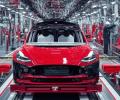
The meltdown in Dalal Street that wiped out investor wealth to the tune of 44 trillion in 2025 also seems to be having a ripple effect on the country's vibrant automobile retail sales.

Passenger vehicle dispatches from companies to dealers rose 4 per cent year-on-year in September to 372,458 units, industry body SIAM said on Wednesday. The overall passenger vehicle dispatches last month rose 4.4 per cent to 372,458 units, as against 356,752 units in September 2024.

Czech carmaker Skoda plans to bring more of its global nameplates into the Indian market as it looks to cater to a diverse set of customers, according to a senior company executive. The company, which now sells products in India ranging from over Rs 7 lakh to upwards of Rs 40 lakh, however, has no immediate plans to introduce electric cars in the country.
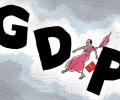
India's real GDP growth in FY26 will slide further to 6.2 per cent in FY26 from 6.5 per cent in FY25, a Japanese brokerage said on Monday. In a research report, Nomura said there is a "divergence" between the growth in GST collections and across other high-frequency growth indicators like auto sales and bank credit growth.

The Freedom 125 has sold 8,310 units in October to date. This is its highest since it was launched in July and may touch close to 9,000 by the end of the month.
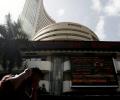
Among Sensex firms, Mahindra & Mahindra was the biggest gainer, gaining 1.7 per cent after the October sales data. Tata Motors Passenger Vehicles (TMPV) rose by 1.69 per cent. Eternal, State Bank of India, Bharti Airtel and Kotak Mahindra Bank were also among the major gainers.

Japanese auto major Honda considers India a key market for its future growth alongside the US and Japan, according to Honda Cars India President and CEO Takashi Nakajima. The Tokyo-headquartered automaker, which operates in India through a wholly owned subsidiary, plans to drive in more SUVs in the country, as the segment continues to see robust sales across varied price points.

The top six auto brands are: Maruti Suzuki, Hyundai, Tata Motors, Toyota, Kia and Mahindra & Mahindra.

Stock market sentiment is likely to remain optimistic going ahead, though some consolidation cannot be ruled out after the recent sharp rally in the benchmarks, analysts said. According to experts, the Nifty and Sensex could indeed move towards new record highs before the end of the year, if global cues stay supportive, crude oil prices remain benign and there is continued domestic earnings momentum.

Automotive (auto) stocks have been among the best performers in the BSE 200 index in recent months. More than half of the top 15 gainers over the past one, two, and three months have come from the sector.

Yamaha expects its first EVs to hit showrooms by the last quarter of FY26 (January - March), once network readiness is complete.

Vinfast sold 137 cars versus Tesla's 109 during the festive months of September and October, as BYD maintained a strong lead with over 1,100 cars sold, according to Fada data.

Before signing up for a BNPL plan, read the fine print carefully and watch for red flags like unclear repayment terms, vague information on interest or late fees, and marketing that downplays the cost of default.

Overall, volume growth is likely to be in the range of 3-8 per cent for two-wheelers and 5-7 per cent for passenger vehicles owing to healthy demand from urban and rural areas and pending order books.

India's macroeconomic health is in a "relative goldilocks situation", and although the risk of higher landed oil prices, due to insurance cost surges and closure of choke points due to the brief Israel-Iran war, has receded, it is "too soon to sound the 'all clear' for the rest of the year", the Finance Ministry said on Friday.
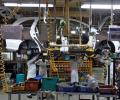
Auto majors Maruti Suzuki India and Hyundai reported muted sales performance in October as the companies curtailed dispatches to dealers in order to cut inventory build up.

Dealers say the significant increase in sales was driven by a need to plug the diminishing inventory as most dealerships were transitioning from BS-IV to BS-VI when the Covid-19 lockdown was announced.
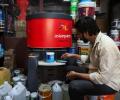
Asian Paints reported a good performance for the second quarter (July-September) of 2025-26 (Q2FY26), with some help from base effects, despite strong competition and extended monsoon. Volume grew in low double digits in the key domestic decorative paints, and value in that segment grew by 6 per cent. Ebitda (earnings before interest, taxes, depreciation, and amortisation) grew 21 per cent year-on-year (Y-o-Y), and PAT (profit after tax) grew 14 per cent. Asian Paints also defended market share better after several quarters where it had lost ground to Birla Opus.

Retail sales of passenger vehicles grew last month but the sales of two-wheeler and commercial vehicles remained low compared to the pre-COVID month of May 2019, according to automobile dealers' body FADA. On Monday, FADA said that overall auto retails stood at 16,46,773 units in May, down from 18,22,900 units in May 2019. "May 2022 retails when compared to May 2019 reveal that sales are still not on a growth trajectory as overall retails were down by 10 per cent.

Traversing from being just vehicle manufacturers to mobility solutions providers amid a raging debate over which eco-friendly technology must be incentivised, the Indian automobile industry is driving in the new year under the shadow of a slowdown in sales with the post-pandemic pent-up demand in distant memory. The shift in the auto industry -- where advanced technologies like autonomous driving, vehicle intelligence, connected features and electrification are quickly gaining traction -- will be reflected in the upcoming Bharat Mobility Global Expo in which India's flagship Auto Expo has been clubbed to be held from January 17-22, 2025 in Delhi-NCR.

With nearly 100 launches and unveils, the Bharat Mobility Global Expo 2025, held in Delhi from January 17 to 22, made one thing clear to automobile enthusiasts: Electric vehicles (EVs) are the way ahead for the Indian auto market for years to come.

South Korean auto major Hyundai Motor Co president & CEO Jose Munoz on Wednesday said the company's Indian arm will invest Rs 45,000 crore by FY30, aiming to make India its second-largest region globally. Addressing investors here in his first visit to the country, Munoz said Hyundai Motor India Ltd (HMIL) has set a target of up to 30 per cent export contribution.

Global trends, trading activity of foreign investors and domestic macroeconomic data announcements would dictate terms in the equity market in a holiday-shortened week ahead, analysts said. Equity markets would remain closed on Wednesday for Gandhi Jayanti. "Looking ahead, it will be interesting to monitor Foreign Institutional Investors (FIIs) and their flow into India.

Maruti Suzuki India on Thursday posted a marginal increase in consolidated net profit to Rs 3,792 crore for the June quarter, with robust overseas shipments compensating for the drop in domestic sales. The country's largest carmaker reported a net profit of Rs 3,760 crore in the April-June period of the previous fiscal year.
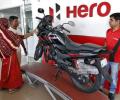
Hero MotoCorp anticipates a big rebound in two-wheeler (2W) sales in rural India over the next four to eight quarters, driven by favourable factors such as a decent monsoon, rising crop prices, improved employment conditions, and increasing consumer confidence, its chief executive officer (CEO) Niranjan Gupta said on Wednesday. Amid tepid rural sales, he stated that there is a "strong case" for GST (goods and services tax) on entry-level two-wheelers, which are under 125 CC, to be moved down from 28 per cent to 18 per cent as they are used by "masses".

Given the stronger rural activity, and potential goods and services tax (GST) impact, investors are bullish on the two-wheeler (2W) segment. In August, dealers in the domestic market picked up 11 per cent more 2Ws year-on-year (Y-o-Y), despite only 2 per cent growth in retail registrations. This indicates inventory stocking ahead of the festival season. Export trends were good. TVS Motor and Royal Enfield may have gained domestic market share.

Auto analysts believe that while auto sales will continue to grow in FY12, some deceleration seems inevitable, as the cost of ownership continues to increase.
Auto majors report positive sales figs for November.

More Indians start car shopping online, pushing automakers and dealers to respond quickly, train staff, and use AI to turn clicks into showroom visits.

The small sports utility vehicle (SUV) segment - comprising models less than 4 metres in length - could witness the "maximum" growth among all categories in the coming months following the recent goods and services tax (GST) rate rationalisation, Tarun Garg, chief operating officer of Hyundai Motor India (HMIL), said.

Hyundai Motor India Ltd has become the country's fifth most valuable auto firm by market valuation in its debut trade on Tuesday. Shares of Hyundai Motor India Ltd, the Indian arm of South Korean automaker Hyundai, listed at Rs 1,931, reflecting a decline of 1.47 per cent against the issue price of Rs 1,960 on the BSE earlier in the day. The stock slumped 7.80 per cent to Rs 1,807.05 during the day and finally ended at Rs 1,820.40 apiece, down 7.12 per cent.

Grant Thornton Bharat's latest survey indicates that hybrids are set to consolidate market share this festive season, bridging the gap between conventional petrol engines and the emerging electric vehicle segment.

Maruti Suzuki, Hyundai and Tata Motors reported a decline in wholesales in September as the companies curtailed dispatches to dealers to reduce inventory build-up amid a decline in demand. Maruti Suzuki India reported a 4 per cent dip in total domestic passenger vehicle wholesales last month to 144,962 units compared to 150,812 units in the year-ago month. The auto major said sales of mini segment cars, comprising Alto and S-Presso, grew marginally to 10,363 units against 10,351 units in September 2023.

Leading automakers Maruti Suzuki, Hyundai, Mahindra, and Tata Motors saw a dip in dispatches to dealers in August amid dip in demand with many prospective buyers postponing their buys anticipating a reduction in vehicle prices on account of the new GST framework. The country's largest carmaker Maruti Suzuki India reported an 8 per cent year-on-year dip in dispatches of passenger vehicles in the domestic market last month.

Festive buying spree unleashed by lower tax rates pushed gross GST collection to about Rs 1.96 lakh crore in October, registering a 4.6 per cent year-on-year growth -- the slowest rate so far this fiscal.
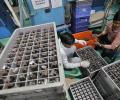
The automobile sector is considered a good indicator of economic health. It has a very long value chain, from primary materials, like metals, glass and plastic, to value-added high-end electronic components, specialised alloys, and software.
